Five Minutes vs The Age of the Universe
In December 2024, Google announced something quietly extraordinary: their quantum processor Willow completed a standard benchmark calculation in approximately 5 minutes.
The same task would require the fastest classical supercomputer on Earth — systems that cost hundreds of millions of dollars and consume megawatts of power — 1025 years to perform. That's longer than the age of the universe by a factor of a trillion trillion.
For most people, that number is so large it becomes meaningless. But the point isn't the magnitude. The point is that quantum computers have entered a new era. They're no longer just laboratory curiosities or theoretical possibilities. They're doing things—real, measurable, reproducible—that classical computers cannot do at all.
And that's just the beginning. Willow's real breakthrough wasn't speed. It was something far more fundamental: for the first time, quantum error rates decreased as scientists added more qubits. Every previous quantum processor got worse as you added qubits, buried deeper under noise and errors. Willow got better. That's the threshold.
What a Qubit Actually Is
To understand why this matters, you need to know what a qubit is—and what makes it so fragile.
A classical bit, the foundation of all computing, is simple: it's either 0 or 1. On or off. A qubit—a quantum bit—is something far stranger.
Thanks to quantum mechanics, a qubit can be 0, 1, or both at the same time, a state called superposition. It exists in a probabilistic haze until you measure it, at which point it "collapses" into a definite state.
But here's where it gets powerful: if you have three classical bits, you can represent one of eight possible states at a time (000, 001, 010, ... 111). But three qubits in superposition can represent all eight states simultaneously. The advantage grows exponentially: 300 qubits can represent more states than there are atoms in the observable universe.
Qubits also exhibit entanglement—a quantum correlation where measuring one qubit instantly affects others, no matter how they're arranged. And they exploit interference, where quantum states amplify correct answers and cancel out wrong ones, concentrating the probability amplitude toward solutions.
This is why quantum computers are theoretically so powerful. They operate on exponentially vast state spaces in parallel.
But here's the problem: qubits are extraordinarily fragile.
The Error Problem: Why Quantum Has Been Stuck
A qubit loses its quantum state—decoheres—at the slightest disturbance. Heat, vibration, electromagnetic noise, stray radiation: all of it collapses the superposition. That's why quantum computers must operate near absolute zero (−273.14°C) inside dilution refrigerators, in vacuum, isolated from every possible source of noise.
Even so, errors occur constantly. Early quantum processors had error rates of 1–5% per gate operation— meaning one in every 20–100 quantum operations was wrong. That doesn't sound catastrophic, until you do the math.
If you need 1,000 gates to solve a problem, and each has a 1% error rate, the probability that all 1,000 gates execute correctly is 0.991000, or approximately 0.00004%. Your answer is noise.
For decades, quantum researchers tried to solve this by adding more qubits. Intuition suggested that redundancy would help— use extra qubits to encode information in a way that errors could be detected and corrected.
But it didn't work. The technique is called Quantum Error Correction (QEC), and it's sound in theory. In practice, the overhead was brutal. To correct errors reliably, you needed so many redundant qubits that the overhead itself introduced more noise. It was a catch-22. Adding qubits meant more error-prone operations to coordinate them. The more qubits you added, the worse the overall system performance became.
That's where quantum computing got stuck for nearly three decades. The "threshold problem." You couldn't add enough qubits to fix errors without breaking the system further.
The Threshold Crossing: When Error Correction Works
In 2023, Google published a paper in Nature demonstrating the first quantum error correction below the "surface code threshold"—the theoretical point at which adding more qubits actually reduces, not increases, errors.
It was a proof of concept. A watershed moment. But it was still small-scale, fragile, and barely below the line.
Then came Willow in December 2024. Google didn't just cross the threshold; they demonstrated exponential error reduction as qubit count increased. For the first time, the advantage was obvious, reproducible, and scaled.
IBM wasn't far behind. In 2025, they announced Quantum Loon, an experimental processor that demonstrated all the key components needed for fault-tolerant quantum computing on a single device. IBM has published a roadmap to deliver fully fault-tolerant systems by 2029.
In the same period, QuEra Computing published techniques that reduced quantum error correction overhead by up to 100 times—a breakthrough in algorithmic fault tolerance that dramatically improves the efficiency of error-corrected qubits.
And perhaps most tellingly: some quantum operations now achieve error rates of 0.000015% per gate. That's in the range where fault-tolerant computation becomes theoretically possible.
First Proof of Practical Advantage
In March 2025, IonQ and Ansys published the first documented quantum advantage over classical high-performance computing in a real-world application. They ran a medical device fluid dynamics simulation on IonQ's 36-qubit system. The quantum computer outperformed classical HPC by 12%.
It's not a huge win—12%—but it's the first time it happened outside the lab, on a practical problem, with real-world validation.
That same year, the Cleveland Clinic and IBM installed the world's first quantum computer dedicated to healthcare research. It's targeting molecular simulation for drug discovery—problems that classical computers struggle with because they require simulating quantum-mechanical interactions at atomic scale. Quantum computers naturally "speak" the language of quantum systems. It's where they should dominate.
What It Will Change: The Killer Applications
The applications that will arrive first fall into a few categories:
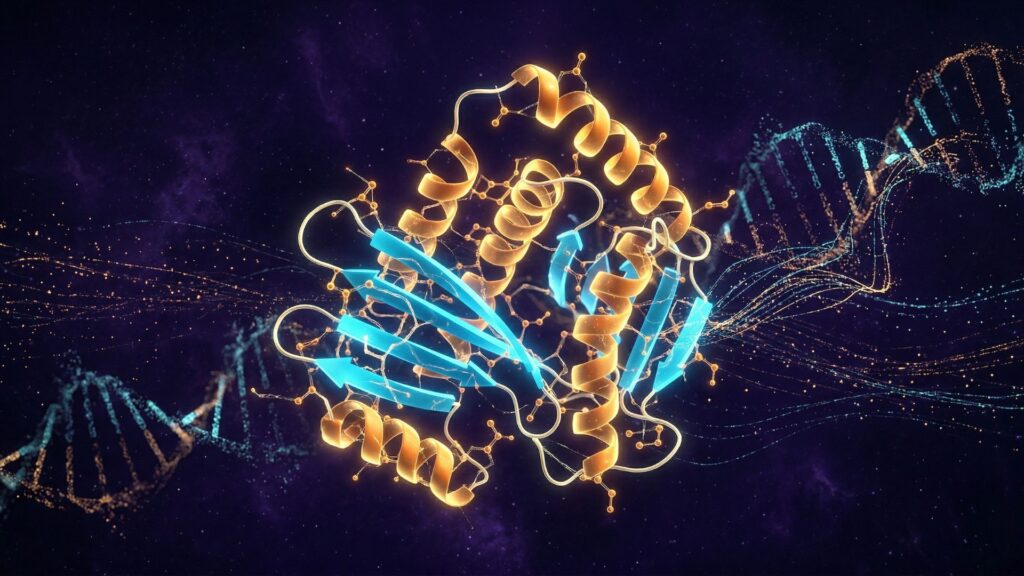
Molecular simulation for drug discovery: Designing new medicines requires simulating how molecules interact. Classical computers can approximate quantum behavior, but only for small, simple molecules. Larger proteins, complex interactions, quantum tunnelling effects—quantum computers can handle these naturally. The pharmaceutical industry is worth trillions. A 10% improvement in drug discovery speed and accuracy is not marginal.
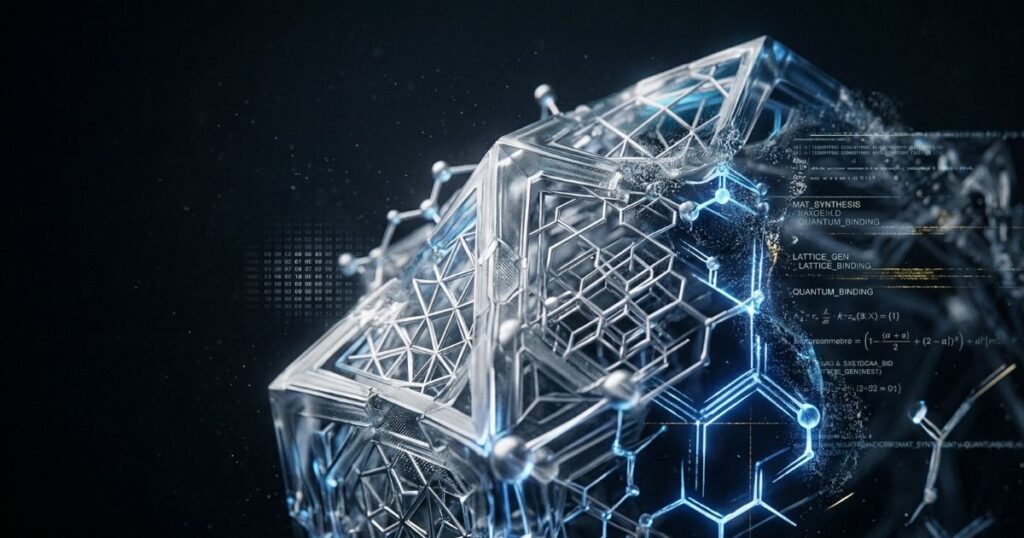
Materials science: Designing room-temperature superconductors, better batteries, more efficient solar cells. These all depend on understanding quantum behaviour of electrons and phonons. Quantum computers can simulate these systems directly.
Optimisation: Logistics routing, financial modelling, supply chain management. Quantum computers excel at searching vast solution spaces. A company optimizing delivery routes across thousands of stops could save millions in fuel and labour.
Cryptography: This is the reckoning.
The Encryption Time Bomb
RSA encryption—the algorithm that secures HTTPS, banking, digital signatures, blockchain—relies on a simple mathematical fact: factoring large numbers is hard. Impossibly hard. A 2048-bit RSA integer requires classical computers to try billions of trillions of combinations, taking longer than the age of the universe.
Except quantum computers can do it instantly. Sort of.
Shor's algorithm, discovered by mathematician Peter Shor in 1994, proves that a sufficiently powerful quantum computer could factor a 2048-bit integer in hours or days, not eons.
For 30 years, this was theoretical. But in 2026, Iceberg Quantum published an analysis of fault-tolerant quantum computing architecture showing that RSA-2048 could be factored with fewer than 100,000 physical qubits—an order of magnitude fewer than previously estimated. Given that Willow is 105 qubits and IBM's roadmap suggests millions of qubits by 2029–2030, the horizon just got much closer.
This isn't speculation. This is why governments are moving now.
In 2024, NIST (the U.S. National Institute of Standards and Technology) finalised three post-quantum encryption standards: CRYSTALS-Kyber, CRYSTALS-Dilithium, and SPHINCS+. These are algorithms believed to be secure even against quantum computers, based on mathematical problems that don't have known quantum speedups.
Banks, government agencies, and defence contractors are now beginning "crypto-agility" transitions— replacing RSA infrastructure with quantum-resistant encryption—a process that will take years and cost billions.
RSA-2048 encryption — the backbone of HTTPS, banking, and digital signatures — relies on the computational impossibility of factoring large numbers. Iceberg Quantum's 2026 analysis suggests this could be broken with fewer than 100,000 fault-tolerant qubits.
NIST has finalised post-quantum encryption standards. Governments and corporations are advised to begin crypto-agility transitions now, before the threshold arrives.
What Comes After the Threshold
For three decades, quantum computing lived in a perpetual future tense. "Ten years away." "Twenty years away." A technology that would revolutionize everything, someday. The phrase became a punchline.
But the threshold changes that narrative. Not because quantum computers are suddenly perfect—they're not. Error rates are still high. Quantum systems are still fragile and expensive and difficult to operate. But because, for the first time, the trajectory is clear. Error rates are falling. The physics is sound. What remains is engineering and scale.
Google's Willow, IBM's Quantum Loon, IonQ's medical advantage, QuEra's overhead reductions, the Cleveland Clinic's drug discovery lab— these aren't lab curiosities anymore. They're the first wave of systems that can do things classical computers cannot. Not faster. Better. Different. In categories of problems that classical computers, no matter how powerful, cannot solve.
The cryptography threat is real and escalating. The drug discovery promise is genuine. The materials science applications are within reach.
We've crossed the quantum threshold. Most people have no idea.
Sources & References
- Google DeepMind — "Willow quantum processor announcement," December 2024. blog.google
- Google DeepMind / Nature — "Quantum error correction below the surface code threshold." Nature 614 (2023). nature.com
- IBM Quantum — "Quantum Loon" experimental processor and fault-tolerant roadmap. ibm.com/quantum
- QuEra Computing — "Algorithmic fault tolerance: 100× overhead reduction," 2025. quera.com
- IonQ & Ansys — "Quantum advantage in medical device simulation," March 2025. ionq.com
- Cleveland Clinic + IBM — "Quantum computing in healthcare research." clevelandclinic.org
- Iceberg Quantum — "Pinnacle Architecture: RSA factoring with fault-tolerant qubits," 2026.
- NIST — "Post-Quantum Cryptography Standards," finalised 2024. nist.gov
- Riverlane — "Quantum Error Correction: 2025 Trends and 2026 Predictions." riverlane.com
- McKinsey & Company — "Making fault-tolerant quantum computers a reality." mckinsey.com

 Buy me a coffee